End the Police Investigating the Police: Why Kenya Must Fully Implement the National Coroners Service Act
For years, one of the deepest problems in Kenya’s fight against extrajudicial executions and police brutality has been the absence of a genuinely independent system for investigating deaths. When a person dies at the hands of, or in the custody of, the State, the first question should not be what the police say happened. It should be: What actually happened, and what independent evidence proves it?
This is why Kenya must urgently and fully operationalise the National Coroners Service Act, 2017. Although the law commenced in 2017, its effective implementation has remained incomplete. This is not merely an administrative delay. It has consequences for life, justice and accountability.
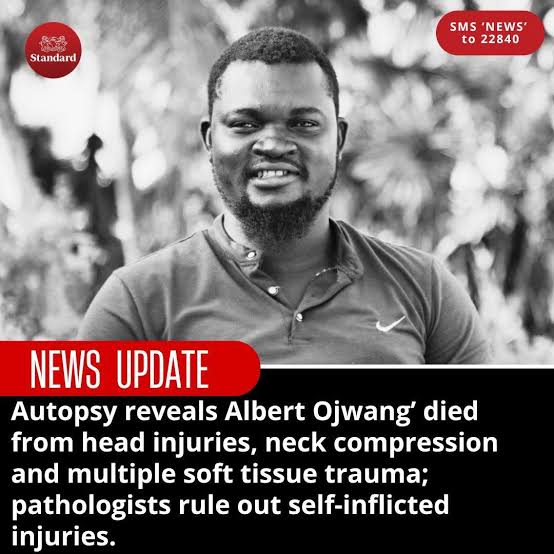
The fundamental problem is structural. When an institution accused of wrongdoing controls crucial elements of the initial investigation, public confidence in the outcome is inevitably weakened. Kenya’s parliamentary inquiry into extrajudicial killings and enforced disappearances itself recognised concerns about the overlap between investigative mandates and the conflict inherent in police investigating allegations against police officers.
That is where coronial investigation becomes critical.
The police investigate crime. A coroner investigates death.
The Coroners Service is designed to investigate reportable deaths, including violent or unnatural deaths, sudden unexplained deaths and deaths occurring in police or military custody. Where a person dies in police custody, the death must be reported to the Coroner. The law also requires the preservation of the scene until the Coroner or a member of the Service arrives.
This changes the starting point of an investigation. Instead of allowing an institution to establish its own version of events first, evidence is preserved so that the truth can be independently established.
A coroner can collect forensic evidence and investigate how, when and where a person died, as well as the cause and manner of death. Where an investigation establishes that a death resulted from an act amounting to an offence, the findings can be forwarded to the relevant authorities, creating an evidentiary trail outside the police chain of command.
This is particularly important in cases involving firearms, torture allegations, blunt-force trauma, falls, drowning, asphyxiation, poisoning and deaths in custody. Families should not have to depend entirely on institutions implicated in a death to explain how their loved ones died. The dead cannot speak; the forensic record must speak for them.
A functioning Coroners Service would complement, rather than replace, IPOA, the DCI, the DPP and the courts. The Coroner would establish the circumstances of death; IPOA would examine police conduct; the DCI would investigate offences within its mandate; the DPP would determine whether prosecution should follow; and the courts would determine criminal responsibility.
Kenya therefore needs to treat the operationalisation of the National Coroners Service as an urgent human-rights and constitutional obligation. The Service requires independence, adequate resources, forensic capacity, access to crime scenes, secure evidence systems, transparent reporting of deaths in custody and effective cooperation with other justice institutions.
Justice does not begin when a suspect is arrested. It begins at the crime scene, with preservation of evidence, an independent post-mortem and accurate documentation of injuries and circumstances.
Kenya must end the monopoly over the narrative.
No more police investigating themselves. No more premature official narratives. No more institutional protection disguised as investigation. Let the evidence speak. Let independent coroners investigate. Let justice follow.
[588]cv22 Official Login | সেরা স্লট গেম এবং অনলাইন ক্যাসিনো বোনাস,cv22 এর অফিশিয়াল লগইন করে সেরা স্লট গেমগুলো উপভোগ করুন। বিকাশ দিয়ে গেম খেলা এবং আকর্ষণীয় বোনাস পেতে এখনই অ্যাপটি ডাউনলোড করুন। visit: cv22