Community-Led Research Training by the Ghetto Foundation: Building Power and Knowledge from Within Mathare
In the heart of Mathare Constituency, one of the largest informal settlements in Kenya, grassroots organizing continues to redefine how communities understand and respond to their own challenges. The Ghetto Foundation, a key player within the broader social justice movement, recently conducted a two-day training focused on community-led research. This initiative marks an important step in strengthening local capacity to generate knowledge, shape advocacy, and design sustainable solutions grounded in lived realities.
The training brought together community members, organizers, and youth leaders with a shared goal: to deepen their understanding of participatory research methods and align their efforts with ongoing action plans. Rather than relying on external researchers who may lack contextual understanding, this approach places the tools of inquiry directly in the hands of residents. It recognizes that those who experience social, economic, and political challenges firsthand are best positioned to investigate and articulate them.
Mathare, like many informal settlements, faces a complex web of issues—ranging from inadequate housing and sanitation to unemployment, insecurity, and limited access to essential services. Historically, research conducted in such areas has often been extractive, with findings rarely translating into meaningful change for residents. Community-led research seeks to reverse this trend by ensuring that data collection, analysis, and application are driven by the community itself.
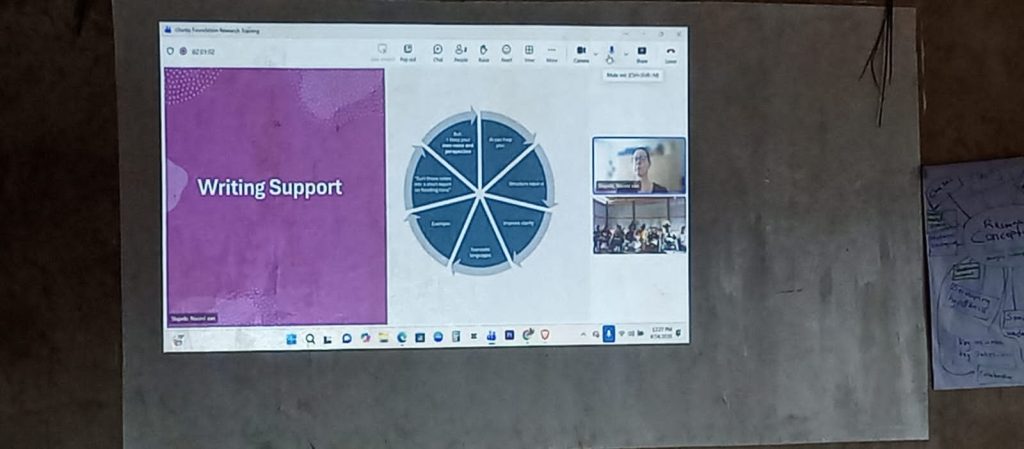
During the two-day training, participants engaged in sessions covering research design, ethical considerations, data collection techniques, and basic analysis. Emphasis was placed on practical tools such as surveys, interviews, focus group discussions, and community mapping. More importantly, the training fostered critical thinking—encouraging participants to question dominant narratives and identify gaps in existing knowledge about their community.
One of the key benefits of community-led research is ownership. When residents are actively involved in generating data, they develop a stronger sense of responsibility toward the outcomes. This ownership translates into more committed advocacy efforts, as the evidence they present is not abstract but deeply personal and reflective of their daily experiences. It also enhances credibility when engaging policymakers, stakeholders, and development partners.
Another significant advantage is accuracy and relevance. External researchers may overlook nuanced social dynamics or misinterpret local contexts. In contrast, community members bring insider knowledge that enriches the quality of data collected. They are better equipped to ask the right questions, interpret responses meaningfully, and identify patterns that might otherwise go unnoticed.
The initiative by the Ghetto Foundation also contributes to capacity building. Participants leave the training with practical skills that can be applied beyond the immediate program. These skills are transferable to various areas, including advocacy campaigns, project monitoring, and community organizing. Over time, this builds a network of informed and skilled individuals capable of driving change from within.
Furthermore, community-led research strengthens collective action. By engaging diverse groups—youth, women, and local leaders—the process fosters dialogue and unity around shared concerns. It creates a platform for voices that are often marginalized, ensuring that solutions are inclusive and representative. This collective approach is essential in a setting like Mathare, where challenges are interconnected and require coordinated responses.
Importantly, the data generated through this process can serve as a powerful advocacy tool. Evidence-based campaigns are more likely to attract attention and support from policymakers and institutions. When communities present well-documented findings, they shift from being passive recipients of aid to active participants in decision-making processes.
As an ongoing program, the community-led research initiative by the Ghetto Foundation is not a one-time intervention but a sustained effort to embed a culture of inquiry and accountability within Mathare. It reflects a broader shift within social justice movements toward participatory approaches that prioritize dignity, agency, and self-determination.
In a world where narratives about informal settlements are often shaped by outsiders, initiatives like this ensure that the story of Mathare is told by its own people—accurately, powerfully, and with purpose.