𝗙𝗿𝗼𝗺 𝗗𝗲𝗮𝘁𝗵 𝘁𝗼 𝗗𝗶𝗴𝗻𝗶𝘁𝘆: 𝗪𝗵𝘆 𝗞𝗲𝗻𝘆𝗮 𝗡𝗲𝗲𝗱𝘀 𝗮 𝗡𝗮𝘁𝗶𝗼𝗻𝗮𝗹 𝗖𝗼𝗿𝗼𝗻𝗲𝗿𝘀 𝗦𝗲𝗿𝘃𝗶𝗰𝗲 𝗨𝗻𝗱𝗲𝗿 𝘁𝗵𝗲 𝗠𝗶𝗻𝗶𝘀𝘁𝗿𝘆 𝗼𝗳 𝗛𝗲𝗮𝗹𝘁𝗵
Kenya’s National Coroners Service Act, 2017 was enacted to establish a National Coroners Service and provide a structured system for investigating reportable deaths, determining the identity, time, manner and cause of death, and strengthening the use of forensic medical science in death investigations.
As we await the long-awaited implementation of the Act, an important institutional question deserves serious public discussion: Where should the National Coroners Service be domiciled?
We support the proposal that the Service should be domiciled under the Ministry of Health rather than the Office of the Attorney-General.
Coronial work is fundamentally a public-health function
The work of a coroner sits at the intersection of medicine, forensic science, public health, investigation and justice. However, much of the technical work begins with the body itself: post-mortem examinations, pathology, identification, forensic analysis and determination of the medical cause of death.
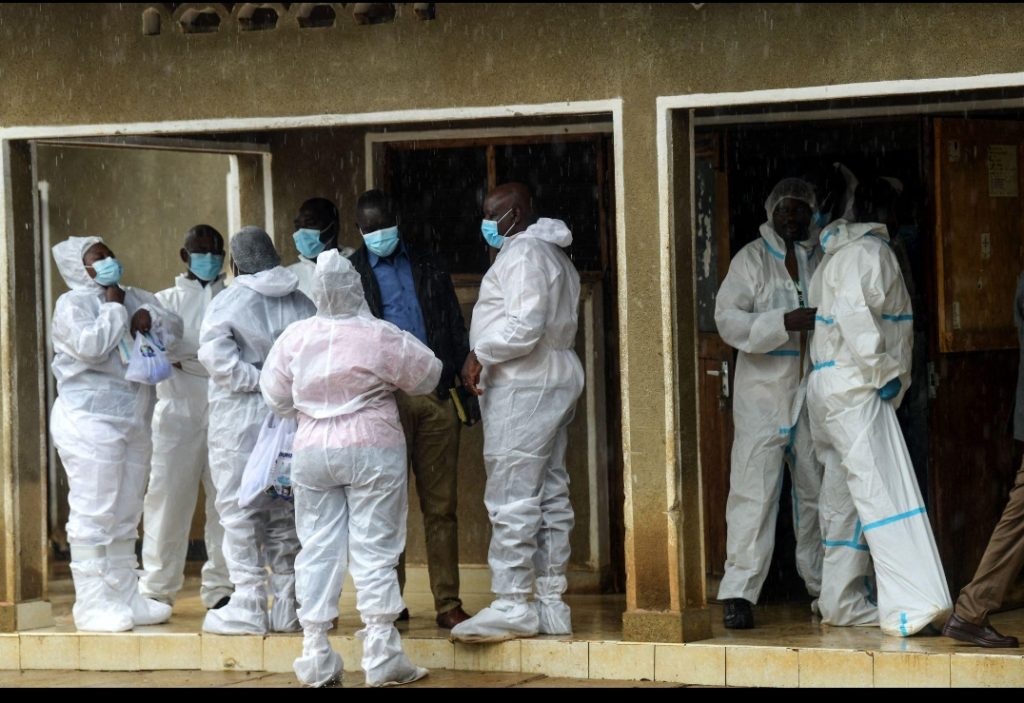
The Ministry of Health already has the institutional mandate and technical infrastructure for medical services, public health, laboratories, health information and professional standards. The Ministry describes its national-government role as including health policy and regulatory functions, technical assistance to counties and management of national referral health facilities.
Locating the Coroners Service within this health-sector architecture would therefore place the technical investigation of death where the necessary medical and forensic expertise is concentrated.
Justice must remain independent from the institution that administers the Service
This proposal does not diminish the role of the Attorney-General or the justice sector.
The Office of the Attorney-General has a fundamentally legal mandate: it serves as the Government’s principal legal adviser and undertakes legal representation and constitutional and legal functions.
The coronial process, however, should produce independent factual and scientific findings that can subsequently inform investigations, prosecutions, inquests and other judicial processes.
That distinction matters.
A coroner should be able to investigate a death and establish the medical and factual circumstances surrounding it without the institutional perception that the process is primarily an arm of government legal representation.
The Attorney-General and other justice institutions should continue to play their necessary roles, but the coronial investigation itself should retain strong professional and institutional independence.
The Act itself already recognises the multi-sectoral nature of coronial work
The existing Act provides for a National Coroners Council bringing together different sectors. Its membership includes the Principal Secretary responsible for coronial services, the Principal Secretary responsible for Justice, Treasury, the Inspector-General of Police, the Director of Public Prosecutions, the Principal Secretary responsible for health services and representatives of the medical and dental professions.
This structure is significant.
It demonstrates that coronial work cannot be reduced to either a purely legal or purely medical function. It requires cooperation between health, justice, policing, prosecution and forensic professionals.
Our proposal is therefore not to remove justice institutions from the coronial system. Rather, it is to place the Service’s primary administrative and technical home within the health sector, while maintaining strong statutory links with justice and law-enforcement institutions.
A Ministry of Health home can strengthen forensic capacity
For the Act to become meaningful to ordinary Kenyans, implementation cannot simply mean creating offices on paper.
Kenya needs functioning forensic pathology services, properly equipped mortuaries and laboratories, trained coroners and forensic professionals, reliable systems for documenting deaths, mechanisms for identifying unknown bodies and effective coordination between hospitals, police, courts and families.
These are areas where the health system has an important institutional role.
The Ministry of Health already operates national health information and laboratory structures and is responsible for medical services and public-health standards.
Domiciling the National Coroners Service there could help integrate coronial investigations into these existing systems rather than creating an isolated structure disconnected from the country’s health infrastructure.
A matter of dignity, truth and accountability
At the centre of every coronial investigation is a human being who has died and a family entitled to answers.
For families of people who die in circumstances that are unclear, violent, suspicious or otherwise reportable, the question is often simple:
What happened to our loved one, and why did they die?
A functioning coronial system should provide credible answers based on evidence rather than speculation.
This is particularly important where deaths occur in custody, during police operations, in circumstances involving suspected violence, or where the cause of death is disputed.
An effective and independent coronial system can contribute to accountability while also protecting the integrity of investigations and the rights of bereaved families.
Implementation cannot wait indefinitely
The National Coroners Service Act was enacted in 2017. Its purpose is clear: establish the institutional framework necessary to investigate reportable deaths and strengthen forensic approaches to determining how and why people die.
Nearly a decade later, the greater concern should be how quickly Kenya can move from legislation to a fully functional coronial system.
The debate over institutional domicile should therefore be understood as part of a larger implementation question.
We need the Government to operationalise the Act, establish the necessary structures, provide resources, recruit and train qualified personnel, strengthen forensic infrastructure and ensure that families can access timely and credible answers.
As we wait for implementation
We support the proposal for the National Coroners Service to be domiciled under the Ministry of Health, with strong institutional cooperation with the Office of the Attorney-General, the Judiciary, the National Police Service, the Office of the Director of Public Prosecutions and other relevant institutions.
This is not about choosing health over justice.
It is about recognising that justice begins with establishing the truth.
And establishing the truth about a death requires medicine, forensic science, investigation and law to work together—within an institution capable of maintaining professional independence and public confidence.
As we wait for the long-awaited implementation of the National Coroners Service Act, Kenya must get the institutional architecture right. The dead deserve dignity, families deserve answers, and society deserves truth and accountability.