𝐒𝐎𝐂𝐈𝐀𝐋 𝐉𝐔𝐒𝐓𝐈𝐂𝐄 𝐂𝐄𝐍𝐓𝐑𝐄𝐒 𝐖𝐎𝐑𝐊𝐈𝐍𝐆 𝐆𝐑𝐎𝐔𝐏 𝐒𝐓𝐑𝐄𝐍𝐆𝐓𝐇𝐄𝐍𝐒 𝐂𝐎𝐌𝐌𝐔𝐍𝐈𝐓𝐘 𝐑𝐄𝐒𝐏𝐎𝐍𝐒𝐄 𝐓𝐎 𝐇𝐔𝐌𝐀𝐍 𝐓𝐑𝐀𝐅𝐅𝐈𝐂𝐊𝐈𝐍𝐆 𝐈𝐍 𝐊𝐈𝐁𝐑𝐀
The Social Justice Centres Working Group (SJCWG) has held a community training and dialogue session in Kibra aimed at strengthening grassroots capacity to identify, document and refer suspected cases of human trafficking, while improving access to justice for victims and survivors.
The training, held at Kibra Huduma Centre on 29 October, brought together Community Health Promoters (CHPs) and other relevant community stakeholders to deepen their understanding of human trafficking, emerging forms of exploitation, recruitment tactics and the vulnerabilities that expose individuals to trafficking within their communities.
The session was conducted under the HAKI Mashinani Project, implemented by the Social Justice Centres Working Group in partnership with Kituo Cha Sheria and Justice Ventures International (JVI). The project seeks to empower grassroots human rights actors with the knowledge, skills and practical tools necessary to strengthen community-based identification, documentation, referral and response to human trafficking cases.
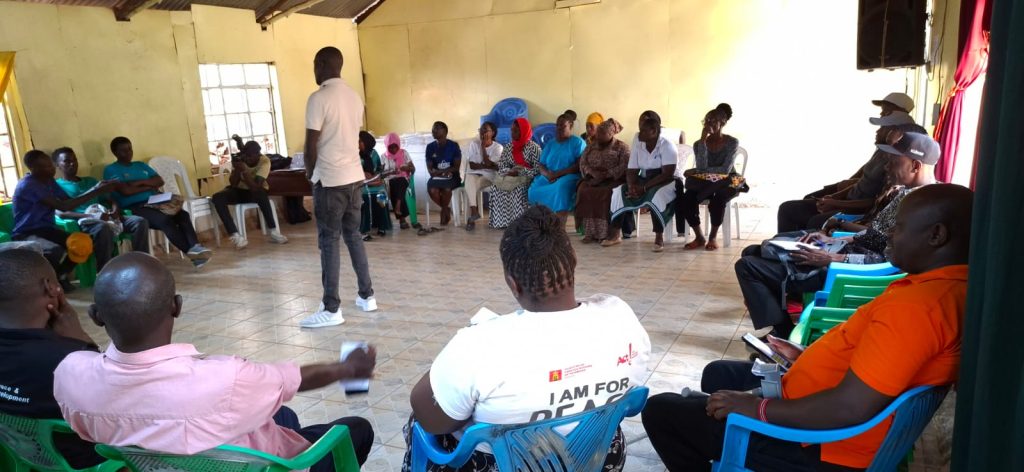
Through facilitated discussions, participants explored how suspected cases can be identified, warning signs of exploitation, and the experiences and challenges encountered by community actors when responding to potential victims and survivors. Particular attention was given to the referral pathways connecting communities with health facilities, police, children’s services, legal aid providers and other relevant protection institutions.
The dialogue also examined the barriers that prevent victims and survivors from reporting trafficking incidents or seeking justice. These include fear of retaliation, stigma, threats, financial constraints, limited information and institutional challenges that often leave vulnerable individuals without adequate protection or support.
Recognising Community Health Promoters as important frontline actors, the training emphasised the need to equip them with appropriate knowledge and referral mechanisms to ensure that suspected cases are handled safely, confidentially and with dignity. Participants were also encouraged to strengthen collaboration with Social Justice Centres, community leaders, service providers and justice actors.
Importantly, the discussions underscored the principles of informed consent, confidentiality and survivor-centred approaches. Participants were cautioned against sharing identifiable survivor information or conducting investigations themselves, instead prioritising safe referrals to competent institutions.
The training concluded with discussions on practical commitments, capacity-building priorities and opportunities for stronger coordination between community structures and formal justice institutions.
The HAKI Mashinani Project builds on ongoing efforts to bring justice closer to communities in informal settlements. Through grassroots documentation, legal support, awareness creation and referrals, the initiative seeks to address the barriers that prevent marginalised communities from accessing justice.
By strengthening the capacity of community actors, the Social Justice Centres Working Group and its partners are working towards a community-based response where human trafficking is identified early, survivors are protected, perpetrators are held accountable and access to justice is no longer determined by one’s economic or social circumstances.