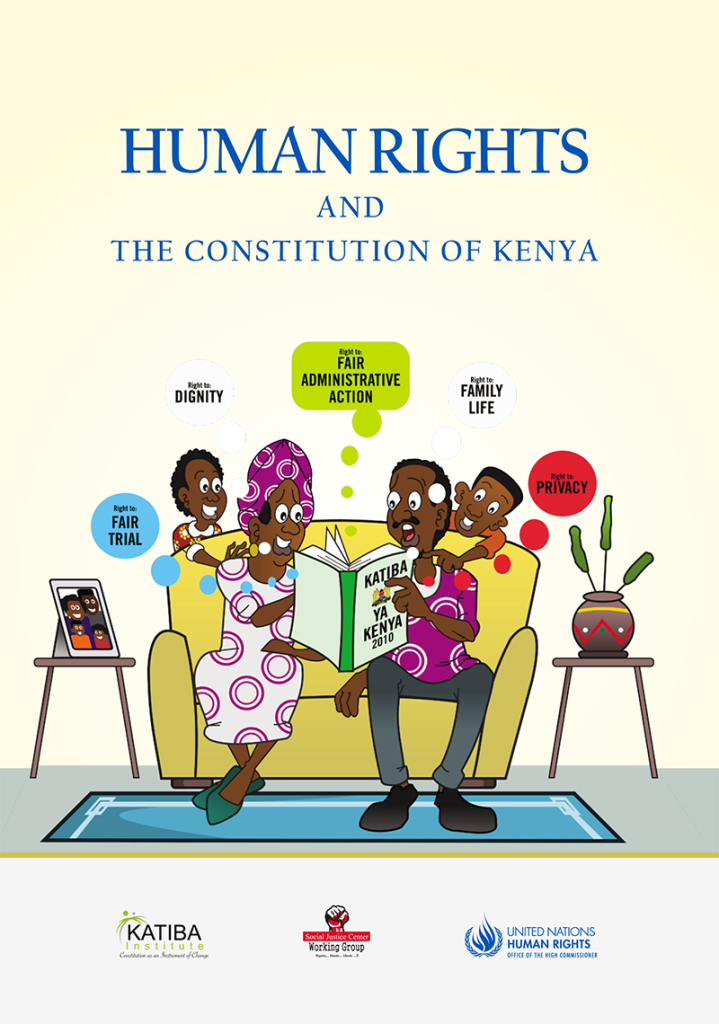
Human Rights and the Constitution of Kenya
This pamphlet was developed by Katiba Institute’s director Jill Ghai assisted by the Executive Director Christine Nkonge, The communications officer Kevin Mabonga and The Programs Officer Michelle Mwanahamisi to mark the 10 years anniversary of the Constitution of Kenya 2010. KI appreciates the support offered by the Office of the High Commissioner for Human Rights in the development of this publication and the Katiba at 10 celebrations. Katiba Institute wishes to acknowledge with gratitude the our partners the Social Justice centre working groups for actively participating in the 10 year commemoration of the Constitution and the development of the publication. We would like to acknowledge the entire Katiba Institute Team for their various contributions throughout the whole process of developing this book.
Human rights in a Constitution are a way to give legal force to the idea that we have certain rights as human beings; they are not the gift of government. They protect individuals and groups against discrimination and oppression by the state which has so much political, economic, police and military power. They guarantee a space within which the people can carry out their lives, work and other activities without unjustified interference by the state. For example, human rights protect our family life, the exercise of our beliefs or religion, enable us to acquire and enjoy property, to form associations and work with others who share our values. Many other rights, such as the freedoms of expression, education and privacy help us to fulfil our potential as human beings. Human rights are also the foundation of democracy, because they ensure to us the right to vote and to choose, and sometimes remove, state officials.